Nampa, Idaho: Meet the Hub of the Valley

Nampa’s history began in October 1883, when the Oregon Short Line Railroad – a subsidiary of Union Pacific – laid track from Granger, Wyoming, to Huntington, Oregon. By 1900, 10 passenger trains a day were coming through Nampa, Idaho.
The town’s location in the fertile Treasure Valley made it an ideal spot for agricultural development. The availability of water from the Boise River and nearby irrigation projects led to the growth of several crops, including potatoes, sugar beets and various fruit. As the local economy became more closely tied to agriculture, Nampa earned the reputation as the “hub of the valley.”
From those early days, Nampa has developed a vibrant arts scene, with museums, theaters and community events, but if you look around the community today, you will find that longstanding industries, like agriculture, are still very much alive and celebrated.
Downtown Nampa Community Association
Far from its years of being just a train stop, Nampa has evolved into a destination for locals and visitors, thanks to the Downtown Nampa Community Association (DNCA), a nonprofit organization focused on building vibrant neighborhoods and a thriving economy through revitalization efforts.
“[The DNCA] puts on amazing events and activities for the community to engage with downtown Nampa, and they love working side by side to help our downtown businesses succeed,” says Robyn Sellers, director of economic development for the City of Nampa.
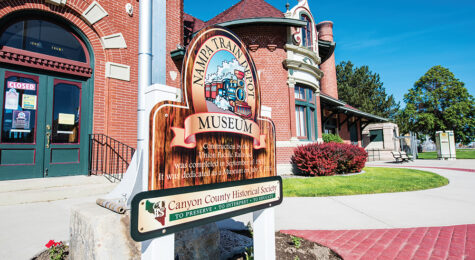
The chief guiding principle of the DNCA is to capitalize on the assets that make downtown unique. Hints of history are found at the Nampa Train Depot Museum, as well as in successful restaurants operating in older buildings. PreFunk Beer Bar, Flying M Coffeegarage, Brick 29 Bistro and Messenger Pizza and Brewery are just a few examples.
“Nampa is such a great place to live because it is simple and authentic. It’s my favorite place in the world,” Sellers says.

Snake River Stampede
Every summer, the Ford Idaho Center hosts the Snake River Stampede, one of the oldest and most prestigious rodeos in the U.S. The Stampede is a direct descendent of the Nampa Harvest Festival, first held in 1911. That year, the Harvest Festival featured crop and stock exhibits that were immensely popular with festival attendees.
In 1913, the committee added a bucking contest, and year by year, other events were added such as calf roping and bulldogging. By 1923, “The Buck Show” was the backbone of the Harvest Festival, but the event still did not have a name.
In 1937, the Snake River Stampede became a sanctioned event of the Professional Rodeo Cowboys Association (PRCA), the governing body for professional rodeo in the U.S. The rodeo separated from the Harvest Festival, and a new name was chosen: the Snake River Stampede. In 1950, a new stadium, seating approximately 10,000, was built and a top Western star was brought in to entertain patrons: Gene Autry. In 1997, the rodeo moved to the Ford Idaho Center.
The Stampede continues to grow and evolve each year, but still shines as a symbol of Idaho’s Western heritage and as an integral part of the state’s cultural fabric.
“In 2021, we added mechanical bull riding and a live concert each night, which we call the ‘After Party,’” says Lynn Calvin, Snake River Stampede executive director. “In 2022, we added breakaway roping, and in 2023, we added the Stampede Western Fest, a daytime shopping experience with over 100 vendors and kids’ activities including a PRCA Youth Rodeo 101 and Dummy Roping.”
Mason Creek Farm
The Mason Creek Flower Farm is operated on a 100-plus-year-old property by an entrepreneur with deep roots in Nampa.
Jerilynn McRae’s grandfather, Jerry Hess, served the community in different civic roles.
“He believed in giving back to society, and he served many years on the Nampa School Board, State Permanent Building Advisory Council, State Board of Education and many other public positions. He was a great example to me when it came to community responsibilities,” McRae says.
McRae started the farm in 2019, and it has quickly grown into a verdant, lush oasis that hosts events from fresh flower and wreath workshops to small weddings on the expansive lawn. Visitors are invited to wander among the hundreds of flower varieties and pick their own bouquets or say hello to one of the farm’s other residents: chickens, turkeys, peacocks, ducks and bees.
The Nampa community has been an integral partner in McRae’s success. “The unwavering support and trust I’ve received has motivated me to continue growing my business and give back to the community that has been an essential part of my journey,” she says.
Get to Know Nampa
Want to learn more about living and working in Nampa, ID? Check out the latest edition of Livability Nampa, Idaho.