Taking a Quantum Leap in Adams County, CO

As the world becomes more reliant on technology, quantum computing – which can process vast amounts of data at unprecedented speeds – can revolutionize industries, from health care and finance to logistics and national security. The potential impact of quantum technology is immense, and Colorado is taking the lead in harnessing this potential.
The Elevate Quantum consortium is a regional technology hub for quantum information technology designated by the U.S. Department of Commerce Economic Development Administration. It consists of more than 70 industry partners and educational institutions, each well-positioned to play a critical role in growing the quantum workforce. Here’s a look at quantum computing in Adams County.
Powering Up Diversity
As a member of the Elevate Quantum consortium, Westminster-based Front Range Community College (FRCC), the largest community college in Colorado, is working toward expanding access to quantum education by providing students with the skills necessary to enter the quantum workforce, regardless of their background or previous experience.
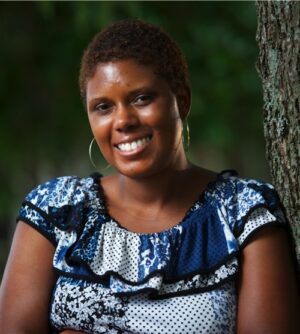
“Our college’s mission is to make educational access and success attainable for all. This is a key part of who we are as an institution,” says Amanda Meier, program director and faculty member for optics technology at FRCC’s Center for Integrated Manufacturing.
“Our existing programs already offer pathways for people who have been underserved by past technology revolutions to be part of the quantum future,” she says. “Now with Colorado’s Tech Hub designation, we expect to be able to scale up our programs and use them as a model throughout the region.”

Training for the Quantum Realm
FRCC’s high-tech optics technology program, housed in the Center for Integrated Manufacturing on the college’s Boulder County campus in Longmont, focuses on training optics, photonics and laser technicians – all of whom are critical to the quantum workforce. The program provides students hands-on training with quantum optics hardware, and the college partners with local industry leaders to build apprenticeship programs that give students valuable real-world experiences.
“Helping to build the quantum workforce through innovative, tailored programming and degree offerings ensures all students are well-equipped to navigate the quantum landscape and seize the exciting opportunities it presents,” Meier says.
Near to Adams County, the University of Colorado Boulder, a world-renowned research institution, has a long history of leadership in quantum research and education.

CU Boulder’s CUbit Quantum Initiative brings together experts from various disciplines, including physics, engineering, computer science and mathematics, to explore the potential of quantum technologies in fields like communication, computing and sensing.
The initiative also provides opportunities for students and early-career researchers to engage in quantum research and gain experience in a rapidly growing field of technology.
“Discoveries in quantum science and technology are driving new applications and, ultimately, new horizons for humanity by advancing human health; position, navigation and timing technologies; sustainable energy and climate solutions; and advanced materials,” says Massimo Ruzzene, vice chancellor for research and innovation and dean of the institutes at CU Boulder.

Revolutionizing Health Care
Meanwhile, the University of Colorado Anschutz Medical Campus in Aurora, one of the nation’s leading medical research institutions, is exploring the application of quantum technology in health care and training health care professionals in the use of quantum tools, with the goal of transforming patient care and medical research.
“As the largest academic medical center in the Rocky Mountain region, CU Anschutz is uniquely poised to lead use cases in human health,” says Laura Buccini, assistant vice chancellor for research development and strategy at CU Anschutz Medical Campus. “The translation of quantum science into health care will require a purposeful, collaborative ecosystem where viable technologies are developed and co-evolve with clinical and biomedical experts.”
Buccini says while quantum computing has significant potential to transform health care, the technology itself still needs to evolve before it’s applicable to human health. She says we should see the clinical applications of quantum computing within the next five to seven years as the science and technology develop, but the university needs to plan now for the integration of the quantum computing workforce.
“Health care is a use case that touches every individual, and, at CU Anschutz, that means tackling some of the biggest challenges to human health for all populations,” Buccini says.
Get to Know Adams County
Want to learn more about living and working in Adams County, CO? Check out the latest edition of Livability Adams County, Colorado.